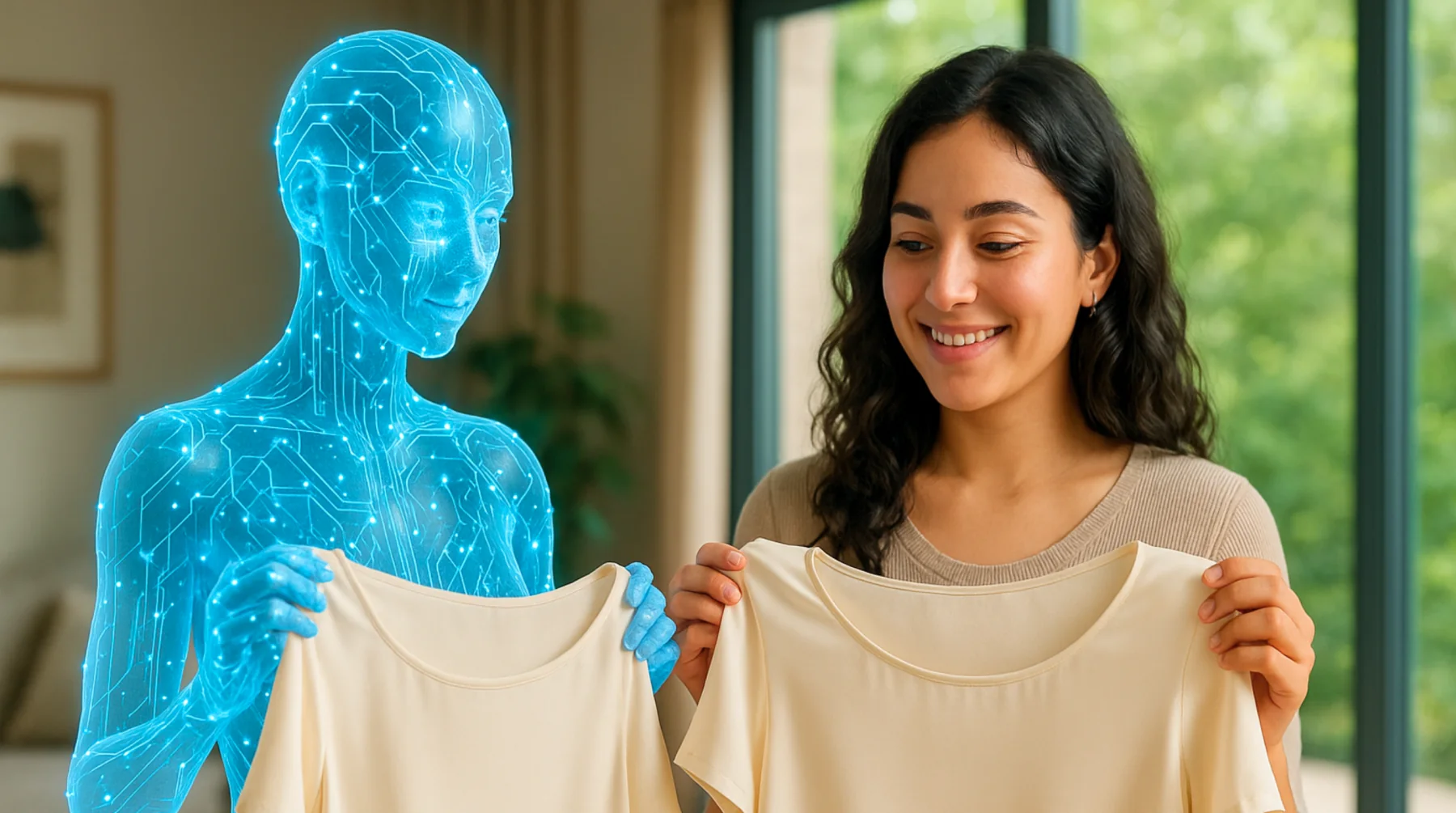
AI for clothing care can help organise information, but it does not replace a label, manufacturer or physical assessment. A fluent answer can still misread a fabric or care symbol.
Useful supporting tasks
Ask for a preparation checklist, a plain-language explanation of accurately transcribed instructions, or questions to put to a cleaner. A useful prompt is: “These are the exact label instructions; what should I check before choosing a programme?”
Avoid including unnecessary personal information in photos. Crop out addresses, documents and details unrelated to the garment.
Where errors matter
A photo can obscure a bar under a symbol, and appearance cannot reliably identify fibre composition. AI does not test dye stability, adhesives or hidden repairs. A short description cannot establish that a mixture of cleaning products is appropriate.
Delicate garments and a wedding dress warrant real assessment rather than repeated generated answers until one sounds convenient.
A checking routine
- Transcribe the label without guessing missing details.
- Compare the explanation with care-symbol guidance and manufacturer information.
- Request the exact source for brand-specific advice.
- Stop and seek clarification when instructions conflict.
This article does not report an SPG experiment or claim that the business uses AI garment diagnosis. Examples illustrate possible uses, not laboratory findings.
Frequently asked questions
Can a photo identify the material with certainty?
It may help a discussion but cannot confirm composition or cleaning behaviour. Read the label and check the actual product.
What if AI contradicts the label?
Do not replace the maker's instructions with a generated answer. Seek clarification before an irreversible treatment.