Removing stains from clothes starts with containing the mark and identifying the fabric, rather than applying the strongest available chemical. No method guarantees removal of every stain without risk.
The first few minutes
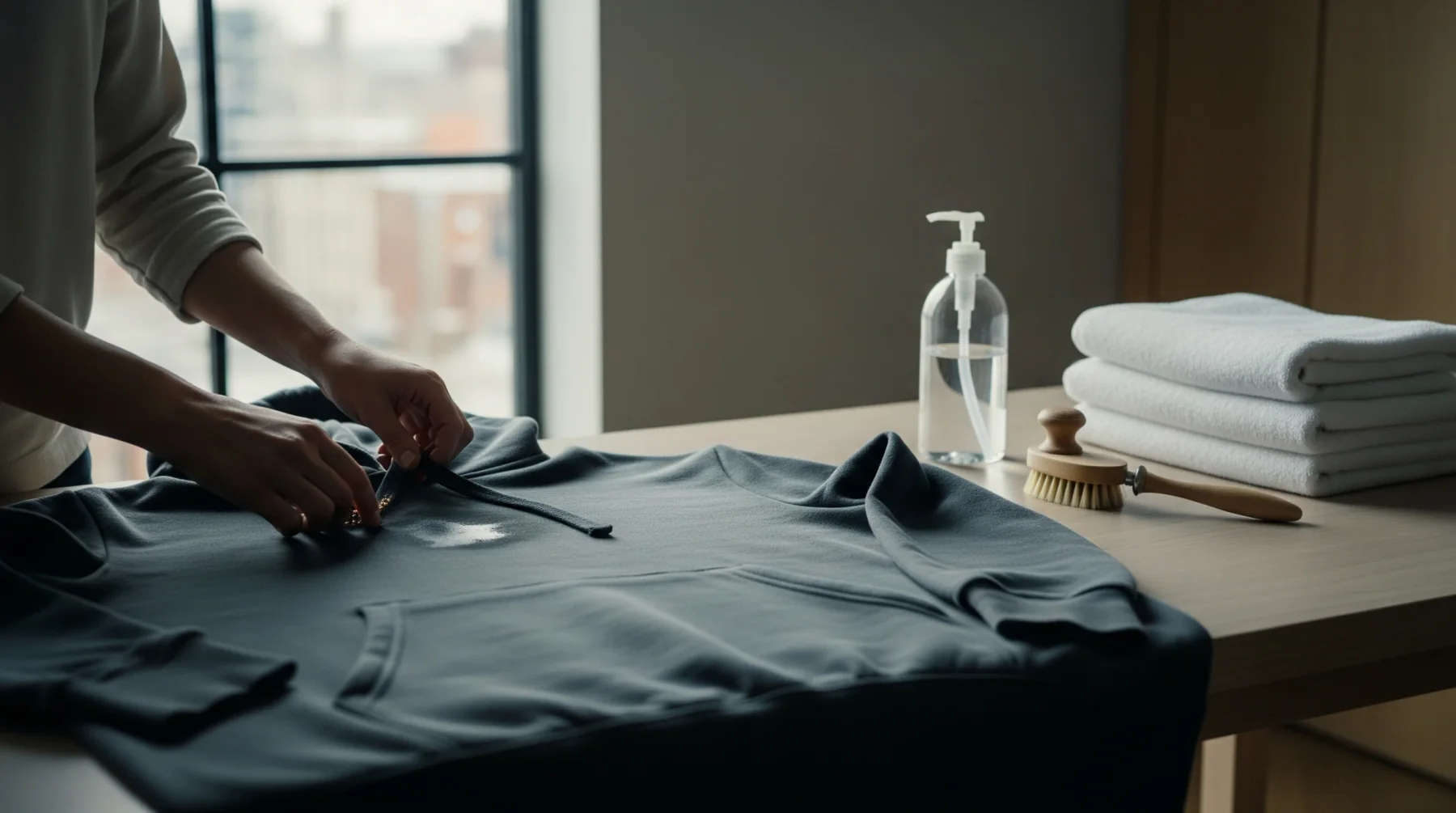
Lift solid residue without spreading it. Blot liquid with a clean, non-colour-transferring cloth. Read the care label and check whether wet treatment is permitted. Avoid rubbing or ironing over the stain.
| Mark | Useful information | Avoid |
|---|---|---|
| Wine or coffee | When it happened and whether milk was present | Rubbing or heat drying before assessment |
| Oil or sauce | Fatty and coloured ingredients | Random household solvents |
| Marker | Product type, if known | Soaking with alcohol without a compatibility test |
| Unknown stain | Treatments already applied | Layering several cleaning products |
If you treat it at home
Use a product intended for the fabric and stain, following its instructions. Test a hidden area and watch for colour or surface changes. Remove residue or rinse as directed. Never mix bleach with acids, ammonia or other cleaners.
For delicate fabrics, unstable prints or missing labels, stop repeated attempts and seek assessment. Treatment-related colour loss is a different problem from the original stain.
What professional cleaning can do
Dry cleaning and other professional processes are selected for the garment and stain. Age, oxidation or fibre damage can leave permanent marks. Explain the spill and previous treatments accurately at drop-off, including unsuccessful attempts.
Frequently asked questions
Should I put salt on every wine stain?
Do not apply one household recipe to different materials. Prioritise blotting, the care label and a compatible treatment.
Should I repeat treatment until the mark disappears?
Stop if colour transfers or the fabric develops shine, fading or texture changes. Repetition may worsen damage.