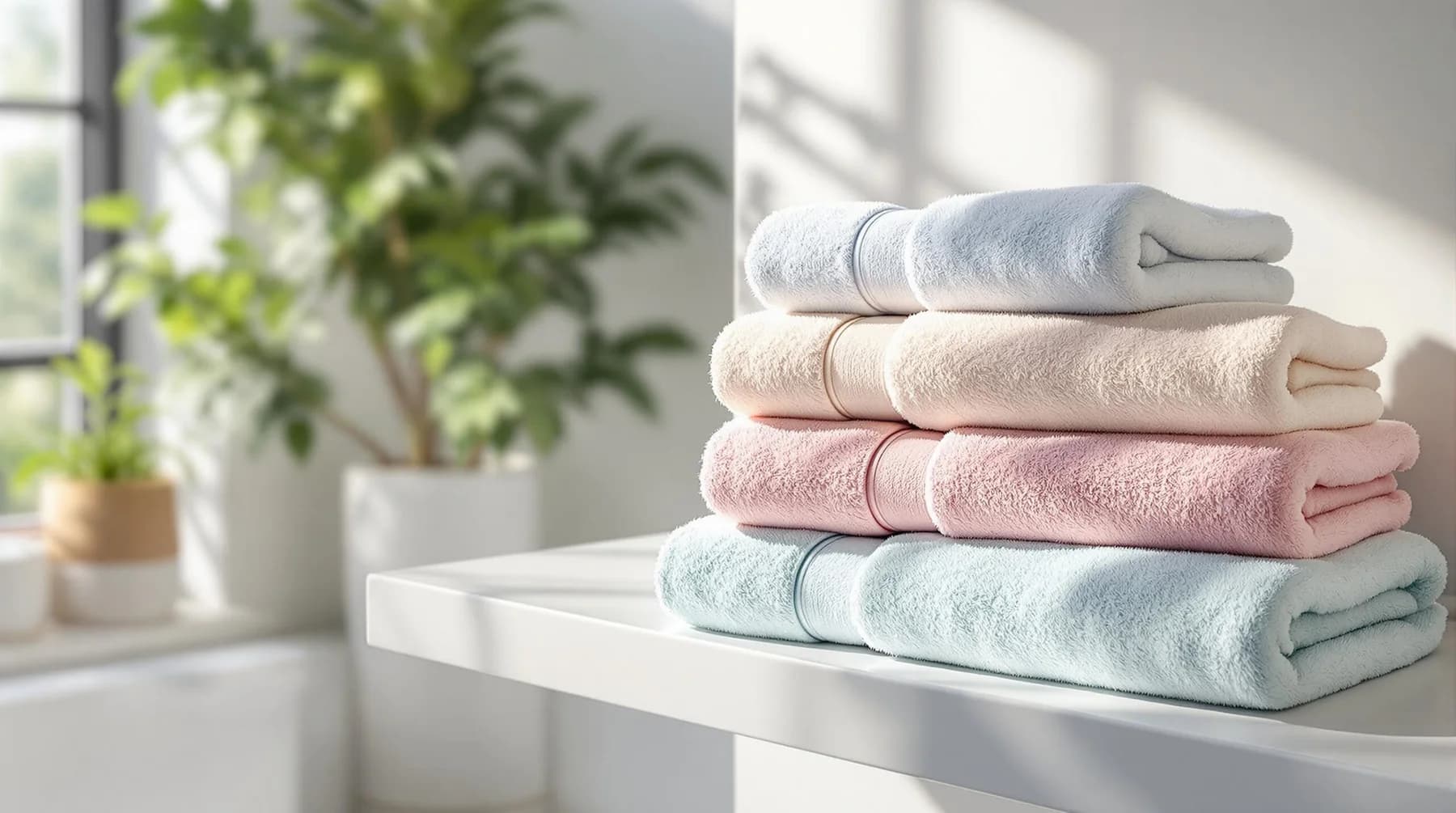
For soft and absorbent towels, review the washing routine before adding another product. Detergent quantity, rinsing, loading and drying can all affect how the fabric feels.
Start with labels and loading
Separate towels by colour and instructions. Avoid mixing them with snag-prone textiles or items needing another programme. Leave movement space instead of forcing the drum full.
Do not automatically select the highest temperature. Embroidery, decorative bands and different fibre blends can have their own limits.
Measure instead of guessing
Use the product's table for load size, soil and water hardness. If towels feel coated, review detergent quantity before buying stronger fragrance. Follow the towel maker's advice on conditioner; some products or uses can affect absorbency.
Do not add improvised vinegar-and-bleach mixtures. For persistent problems, change one variable at a time and assess the outcome.
Drying and use
Unfold towels after washing and dry by a permitted method. Avoid crowding damp towels onto one hook or folding before they are fully dry. When tumble drying is allowed, choose a suitable setting rather than extending the cycle unnecessarily.
Persistent smells call for a review of the whole routine, covered in textile odours, rather than masking them.
Frequently asked questions
Does more conditioner improve every towel?
No. Check whether it is recommended and at what dose. Perceived softness and absorbency are different properties.
Why does a towel smell after storage?
Check drying, time left in the machine and rinsing. Examine the routine before blaming one product.