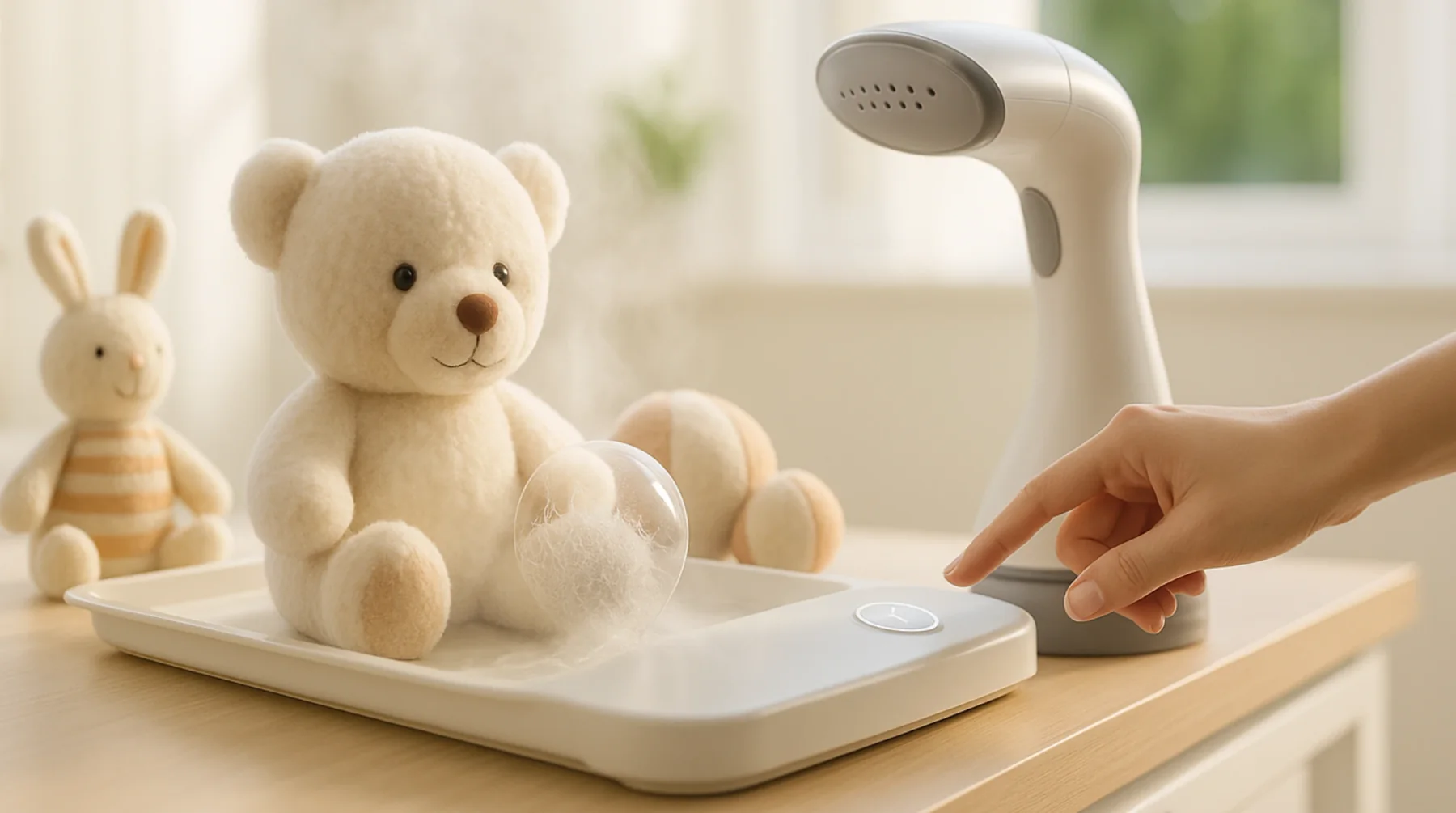
Washing soft toys depends on the label, filling and internal components. A textile toy with batteries, a sound mechanism or glued parts cannot be treated like a towel.
Inspect first
Check manufacturer instructions, seams, attached eyes and accessories. Remove only components designed to detach. Do not force open a part of the construction.
If the label allows surface cleaning only, do not immerse the toy. For washable toys, follow the specified programme and temperature limit, using an appropriate detergent dose.
Protect shape and check drying
A laundry bag may reduce snagging where washing is permitted, but it cannot make a non-washable toy machine-safe. Avoid loads containing heavy or abrasive items.
After cleaning, inspect filling inside the head, limbs and seams. Do not return a damp toy or one with loose parts to a child. Bulky toys raise similar drying questions to duvets and pillows.
Cleaning is not automatically disinfection
Do not assume an ordinary cycle eliminates all microorganisms. Where specific hygiene requirements apply, follow manufacturer guidance and advice relevant to the situation. Do not use a surface disinfectant on a toy that may be mouthed unless it is explicitly intended for that use.
If detergent selection is a concern, see detergent for sensitive skin. No formula is presented as suitable for every child.
Frequently asked questions
Can I machine-wash a toy with a sound mechanism?
Do not assume the mechanism is waterproof. Check the model instructions and whether the maker provides for removal.
Does fragrance prove a toy is clean?
No. Assess cleaning, rinsing, drying and the condition of attached parts rather than scent strength.