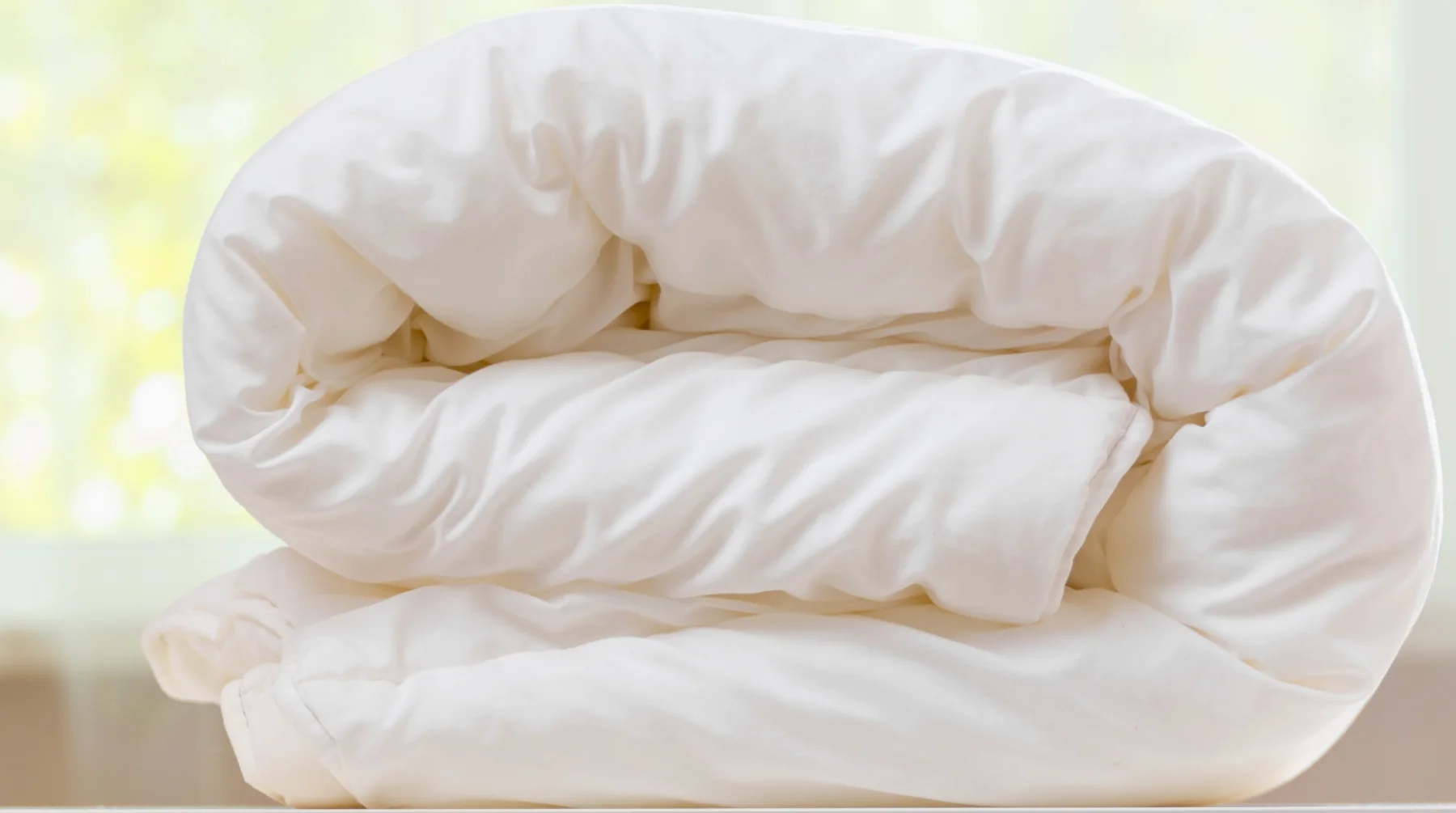
Washing duvets and pillows depends on their filling, care label and the ability to dry them completely. Fitting an item inside a drum does not establish that the appliance can wash it properly.
Check each item separately
Read the duvet's label, not just its cover. Down, synthetic fibres, wool and foam have different needs. Inspect seams and worn patches: a small tear can release filling during a cycle. Follow separate instructions for covers and bed linen.
Decide before starting
| Situation | Prudent decision |
|---|---|
| Washing is permitted and programme capacity is sufficient | Follow the instructions and prepare the drying method first |
| The item must be forced into the drum | Do not overload the machine |
| The label or filling identification is missing | Request assessment |
| A foam pillow or item with special components | Check the manufacturer's guidance; the whole item may not be washable |
Washing and drying
Use a compatible product at the recommended dose and the permitted programme. Do not automatically add conditioner or dryer balls; check their suitability for both item and appliance.
Plan drying in advance. Inspect edges, corners and dense sections of filling. Do not put damp bedding into a cover or cupboard. See textile storage for preparation between seasons.
Handing items to SPG
Describe the filling, dimensions and stains. Acceptance and the appropriate service are confirmed during assessment; review household textile services before ordering.
Frequently asked questions
Does a large duvet simply need a longer cycle?
No. Capacity, movement, rinsing and drying are separate issues from programme duration.
Can I store a duvet when its surface feels dry?
Not necessarily. Check thick filled sections too; moisture inside can be easy to miss.